
CMAC admissions portal
2026Acknowledged, fixed and retested
Private applicant records
An admissions document should belong to its applicant. The reported access-control failure allowed another person to retrieve private application documents, putting photographs, signatures, contact information and academic records at risk.
A document used to apply to university can contain enough personal information to support impersonation or targeted scams. Checking who owns a document is an essential privacy boundary.
Disclosed with Nikhil Thakuraan through CERT-In. My public disclosure records the organisation’s remediation and a subsequent retest confirming the affected access flow was secured.
My public disclosure and acknowledgement record ↗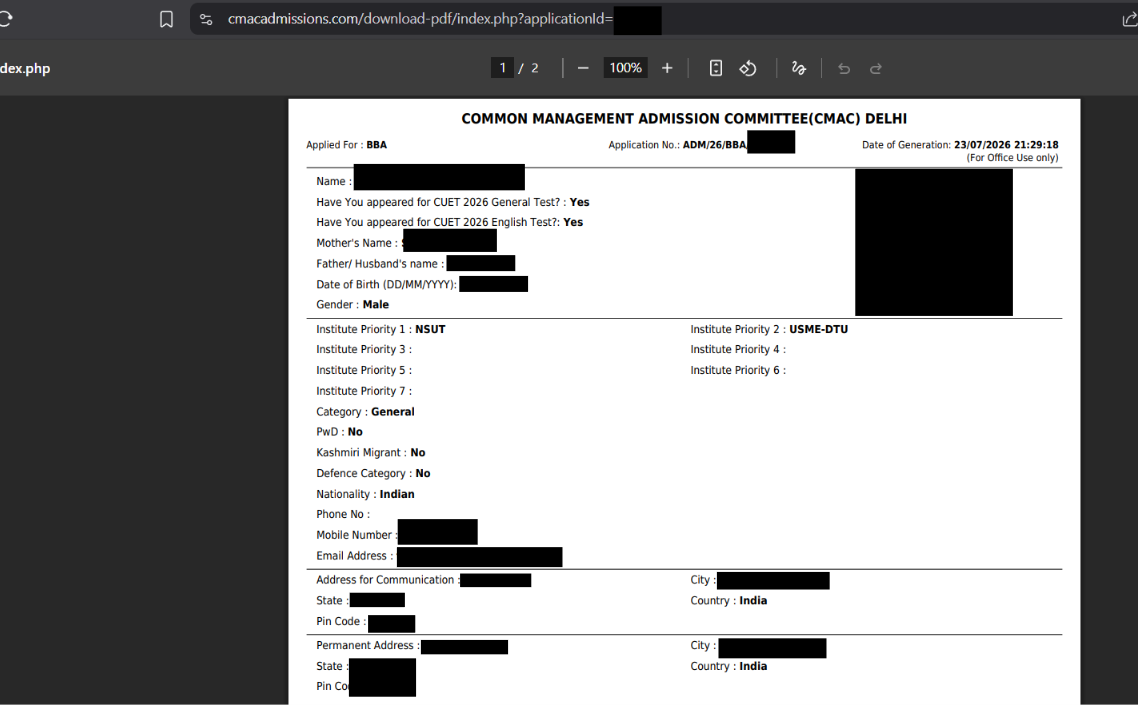 View full size ↗
DTU Saarthi portal
Undated screenshotScreenshot evidence documented
Privacy of uploaded certificates
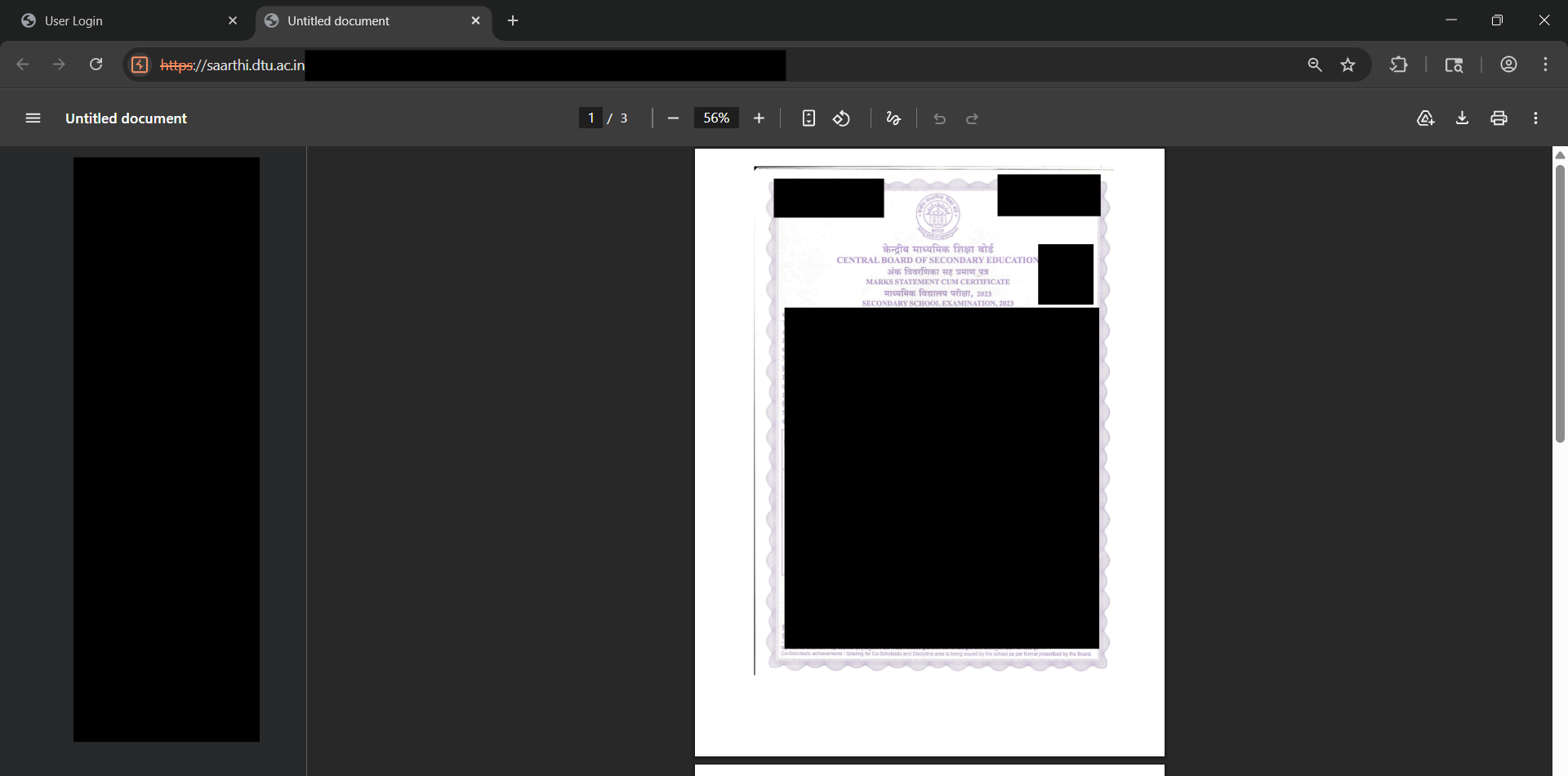
Personal documents uploaded for admissions need the same protection as an applicant’s account. The supplied screenshot shows a school certificate open in a PDF viewer on Delhi Technological University’s Saarthi portal.
A school certificate can contain names, roll numbers, academic results and other identifying details. Access to these uploads should be checked for each request, including requests made directly to a document address.
The redacted screenshot documents the type of record involved. Reporting, remediation and retesting details have not been supplied for this entry.
 View full size ↗
IIM Sambalpur registration portal
23 August 2026Findings reported
Identity documents accessible without login
Controlled checks found that private applicant uploads could be retrieved without signing in. The assessment covered identity documents, signatures, photographs and academic records. It also identified weaknesses in password-recovery and one-time-password workflows.
A login page can look secure while the files behind it remain exposed. Identity documents and signatures need protection on every request, including requests made directly to the stored file.
The report rates the document exposure High and records three findings. Validation used researcher-owned and applicant-provided references. The report does not establish how many applicants were affected or confirm remediation.
IIM Sirmaur admissions portal
September 2026Assessment reported
Server control and applicant privacy
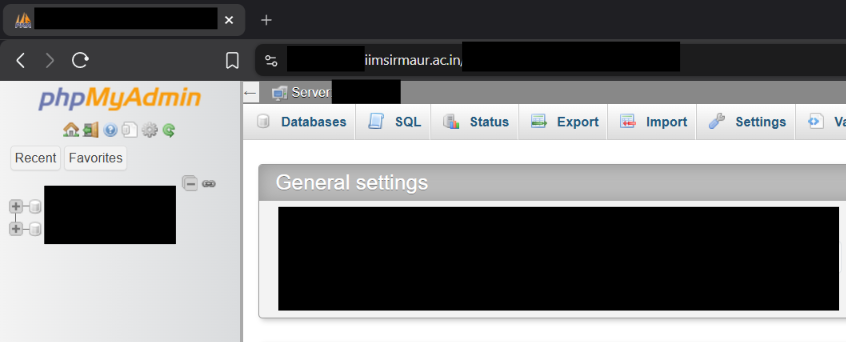
The assessment describes eleven weaknesses, including a route to running unauthorised code on the server, exposed database administration and access to applicant records and supporting documents.
The most serious risk goes beyond viewing a document. Running code on an admissions server could compromise the system responsible for protecting applicants’ information. The report also describes exposure of sensitive category and disability information.
The supplied assessment classifies one finding as Critical, four as High and six as Medium. These are the report’s severity ratings. A completed remediation or retest is not documented in the supplied material.
 View full size ↗
Saral Sanchar
29 October 2026Observations submitted for verification
Possible cross-application document access
Observed differences between returned application documents raised concerns that a user might receive records belonging to another applicant. The report also asks the operator to examine permissions around attachments and downloads.
Application PDFs can contain names, photographs and signatures. Returning another person’s application would break a basic expectation of a private account.
The submission explicitly describes a suspected access-control issue. Its server-side cause, full scope and remediation require verification by the operator.
From a finding
to a fix.
The useful part of a report is making it clear enough for the responsible team to investigate and repair the problem. That means explaining the risk, documenting controlled evidence and following up through the disclosure process.
These public accounts draw on the reports, redacted screenshots and my public CMAC disclosure. CERT-In acknowledgement, remediation and retesting are recorded for CMAC. The other entries retain the status supported by their source material.
Get in touch about security work ↗